
Karnes County Parole or Probation
A person released from John B. Connally Unit or another Texas prison may remain under TDCJ Parole Division control. The Texas Board of Pardons and Paroles makes parole and mandatory-supervision decisions. The Parole Division then handles field supervision through district offices. Probation, which Texas law often calls community supervision, begins with a county or district court order. Karnes County misdemeanor matters generally run through the County Clerk, while felony matters run through the District Clerk and the 81st or 218th judicial-district network.
Release does not mean discharge. A person may leave a prison gate and keep serving the sentence in the community. By contrast, discharge ordinarily marks completion of the sentence and supervision duty. A person on probation follows the court judgment rather than a Board parole vote. These distinctions decide which record to request and which office can confirm the current status.
| Question | Parole or mandatory supervision | Probation |
|---|---|---|
| Who authorizes it? | Texas Board of Pardons and Paroles under state law | The sentencing court |
| Who supervises? | TDCJ Parole Division | The responsible community-supervision office |
| Best record | TDCJ status, Board decision, and Parole Division confirmation | Judgment, supervision order, and later court filings |
| How it ends | Discharge, completion, or another official action | Court discharge, completion, revocation, or modification |
Verify Karnes County Post-Release Supervision
Begin with the custody system the person actually left. The public TDCJ Inmate Information Search is limited to people currently incarcerated in TDCJ. It can preserve a TDCJ or SID number before release, but a missing result is not proof of discharge. Karnes County Jail release evidence instead belongs to the sheriff and the related court file. Do not ask Connally Unit staff to confirm field supervision once central TDCJ records and the Parole Division have taken over.
- Confirm the full name with a date of birth, TDCJ number, SID, booking number, or case number. Two identifiers reduce name collisions.
- For a prison case, use TDCJ offender-information channels to verify the release event, then use the Parole Division for active supervision.
- For probation, search the Karnes court case and read the judgment, community-supervision order, modification, revocation motion, and discharge order.
- Contact the responsible supervision office only after the official record identifies the agency. Public files may omit confidential reporting details.
- Record the agency, date checked, exact status words, and any decision code. Ask the originating custodian to resolve conflicts.
Karnes County Supervision Contacts
Texas separates the Board vote from field supervision, so one office rarely answers every question. The Board route is useful for a pending or completed parole review. TDCJ Parole Division handles release-processing status after a favorable vote and the district-office path after release. A Karnes court file is the durable starting point for probation. The research does not identify a single local office as the right field office for every person, so the statewide directory should control rather than an assumed address.
TDCJ Parole Division
District-office and supervision directory
Release-processing status: 512-406-5202
Texas Board of Pardons and Paroles
Official Board entry point
Review status line: 844-512-0461
For probation records, use the Karnes County Clerk for the misdemeanor route or the Karnes District Clerk for felonies. A clerk can identify filed orders, but the community-supervision office controls current reporting instructions.
Note: A public court docket may confirm a probation order while withholding private supervision details and personal contact information.
Karnes County Parole Review Records
Ordinary Texas parole review is not a formal public hearing with a person-by-person calendar. TDCJ Parole Division identifies cases in advance, an Institutional Parole Officer prepares a case summary, and a three-person panel votes in sequence. Two matching votes produce the outcome. That process explains why searching for a daily Karnes County parole hearing docket will not yield a full list.
For a currently imprisoned person, open the TDCJ detail and select Parole Review Information when available. Preserve the official vote code and conditions. FI codes reflect favorable action, sometimes tied to a program or later month. NR is a denial with another review date. RMS and DMS concern mandatory supervision. Eligibility is not approval, and even favorable action is not the actual release record.
The Board’s parole panel review explanation confirms that ordinary reviews do not use formal hearings. Revocation hearings are different. They address alleged violations after release and may occur in county jails, but the Board still does not publish a full public calendar of named people.
Karnes County Violations and Warrants
The official TDCJ Parole Division page is the durable entry point for district-office navigation.
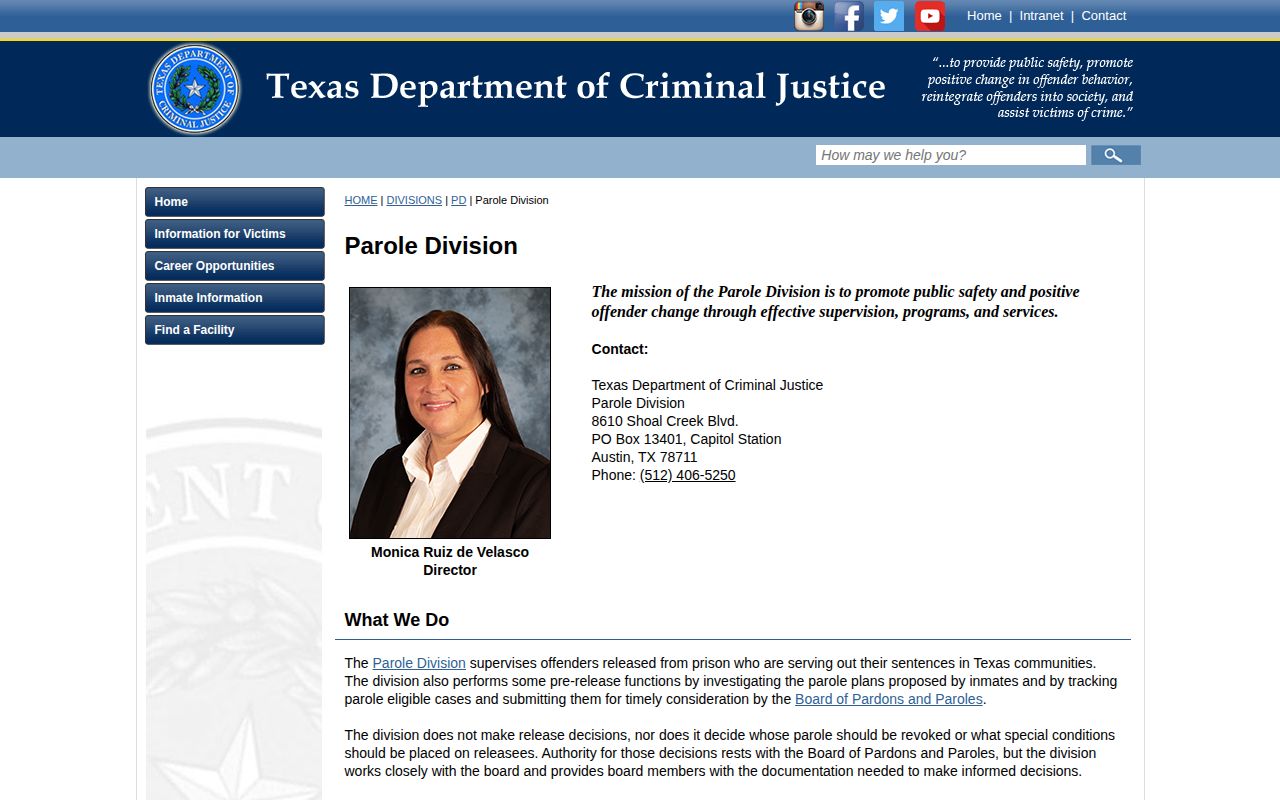
Its statewide structure is why the responsible office should come from the official directory.
An absconder is a person the supervision agency says has stopped complying or cannot be located. That label does not erase the earlier release. A parole warrant, often called a blue warrant, may lead to arrest and a return to custody. Probation violations may produce a motion to revoke and a court warrant. The later event must be read separately from the original release.
No Karnes sheriff-published parole absconder list was found in the official county sources. Verify a named person through the TDCJ Parole Division or the court and responsible community-supervision agency. Texas IVSS can provide selected custody or supervision-change alerts, but an alert is not a warrant record or discharge certificate. Exact event wording matters.
Conditions vary by official order. A violation allegation is not a final revocation. For parole, distinguish the warrant, revocation process, and final Board action. For probation, distinguish the motion, hearing, and signed order.
- Parole
- Conditional community release from a prison sentence under TDCJ supervision.
- Probation
- A court-ordered community sentence, also called community supervision in Texas.
- Mandatory supervision
- A statutory release form governed by eligibility rules and, for many cases, Board review.
- Absconder
- A supervision status reporting loss of contact or noncompliance.
- Discharge
- Official completion of the sentence or supervision obligation.
Connally Unit Prerelease Program
The official John B. Connally Unit profile lists CHANGES/Pre-Release programming. That is a distinctive Karnes County feature. It can help prepare a prisoner for transition, but program listing or participation does not guarantee parole eligibility, Board approval, a release day, or a community placement. Central TDCJ records still control the legal event.
A transfer from Connally Unit to another TDCJ unit is continuing imprisonment, not release. When a projected date approaches, keep the TDCJ or SID number and compare the current unit, projected release date, parole eligibility date, and later status. After departure, use Parole Division confirmation if supervision follows. The broader Karnes County released inmate search and record path explains how county, state, federal, and immigration custody routes differ.
Karnes County Supervision Discharge
A discharge check should also keep the release mechanism apart from later record access. Parole can end after the person has spent part of the sentence under field supervision. Probation can end through completion or a signed court action. A warrant, modification, or revocation can interrupt either path. For that reason, an old projected end date is only a lead. Ask for the current status and the date of the official action.
Supervision ends through an official act, not merely through the passage of an expected date. For parole or mandatory supervision, request the TDCJ status or historical record and ask the Parole Division whether supervision remains active. For probation, inspect the court file for a discharge, termination, revocation, or amended order. A closed case label alone may not state the exact supervision outcome.
Texas Government Code chapter 508 provides the parole, mandatory-supervision, release, and supervision framework. Eligibility provisions vary with the offense and sentence. Conditions and decision codes can also affect the path. Public access is governed in part by Government Code chapter 552, but exceptions and confidentiality rules can limit details.
Expunction and nondisclosure are separate legal remedies. Neither occurs simply because supervision ends. When a record is unavailable after a lawful restriction, do not reconstruct it from an unofficial source. The reliable conclusion is the one supported by the court, TDCJ, Board, or supervising office that created the record.
When requesting a historical TDCJ answer, provide the full name, TDCJ or SID number when known, date of birth, and the exact fields sought. For a Karnes County probation order, provide the case number and ask the proper clerk for the filed judgment and later discharge or revocation order. Narrow identifiers help the custodian return the right case and make the result easier to reconcile with the original release.